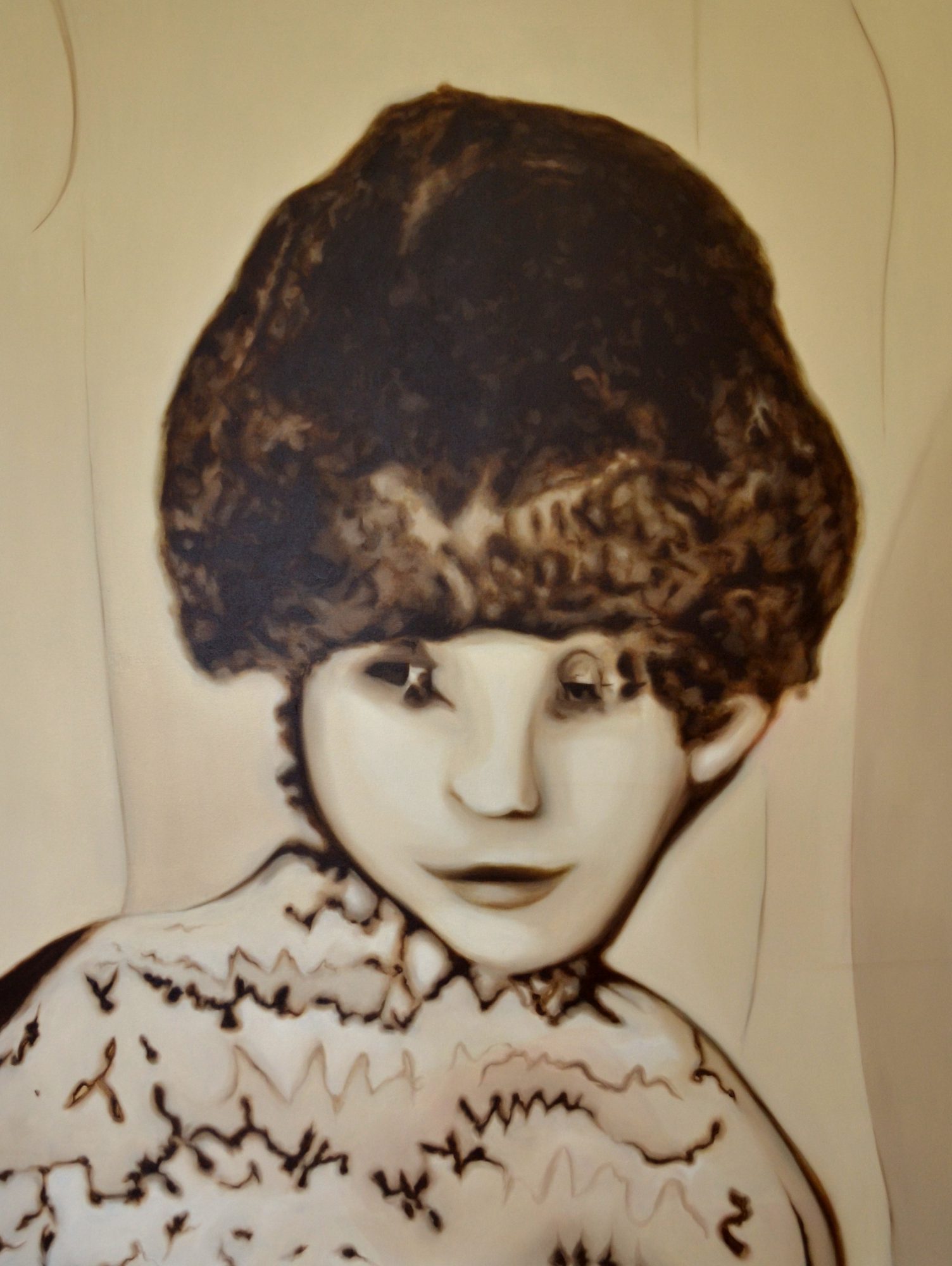
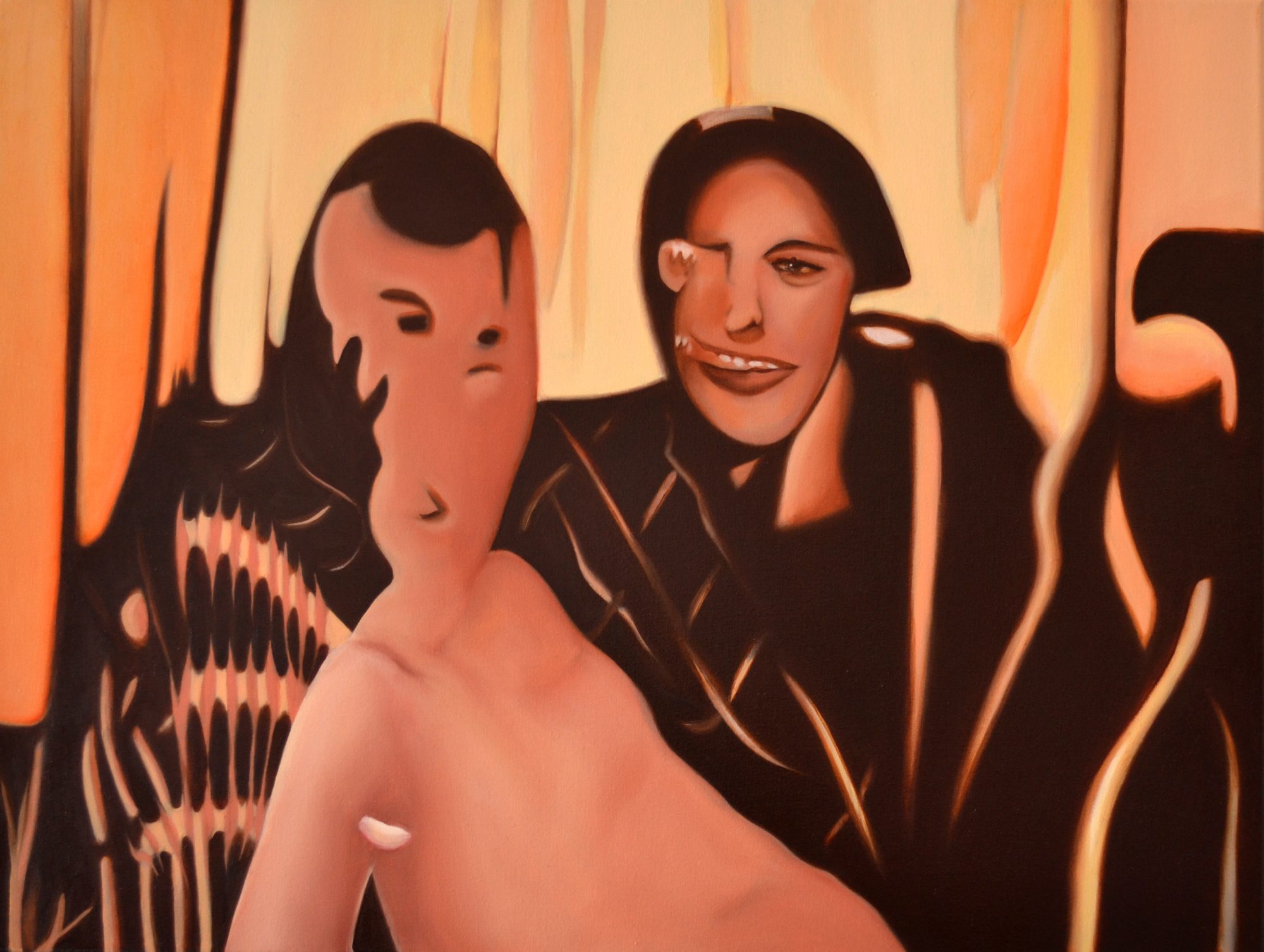
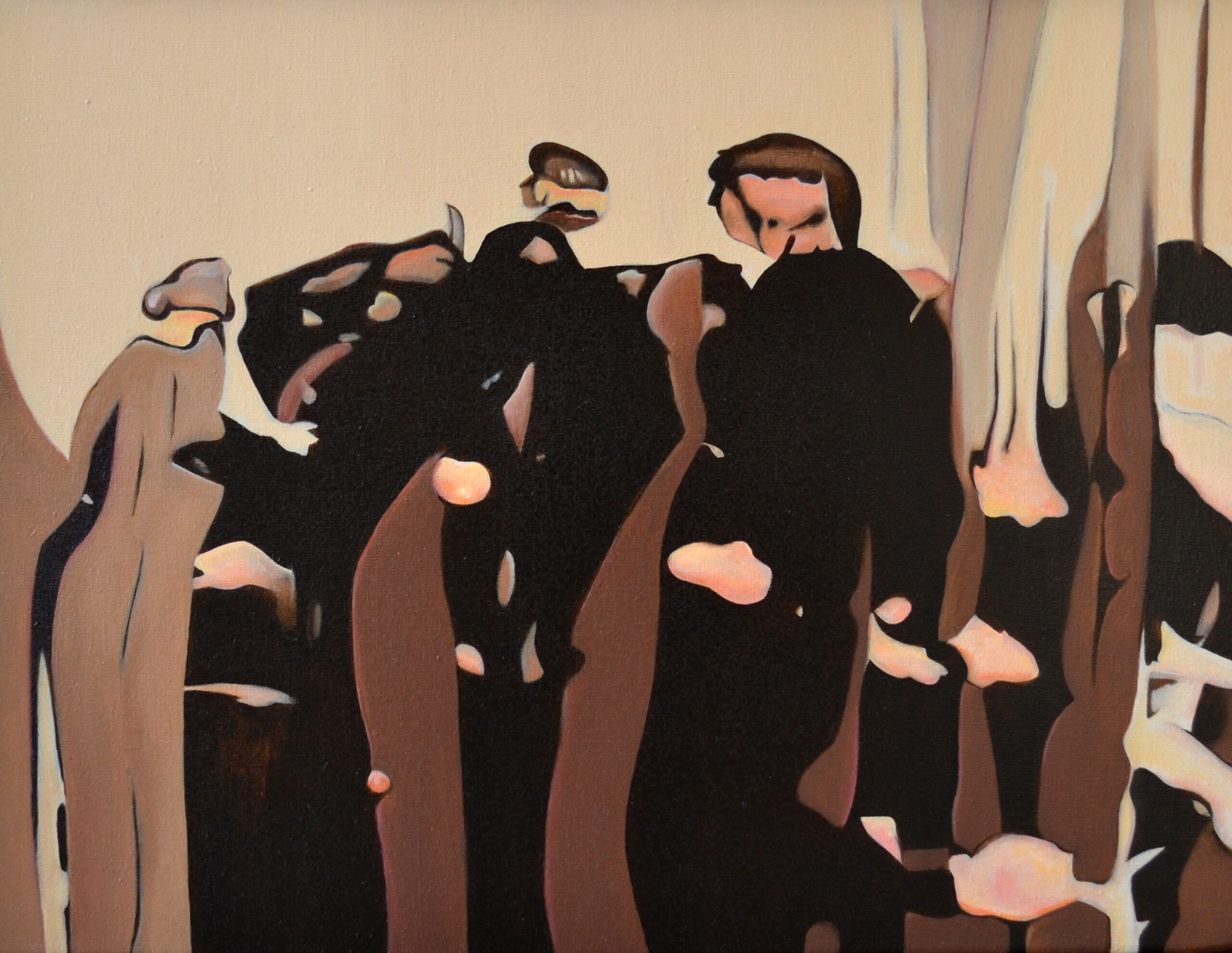
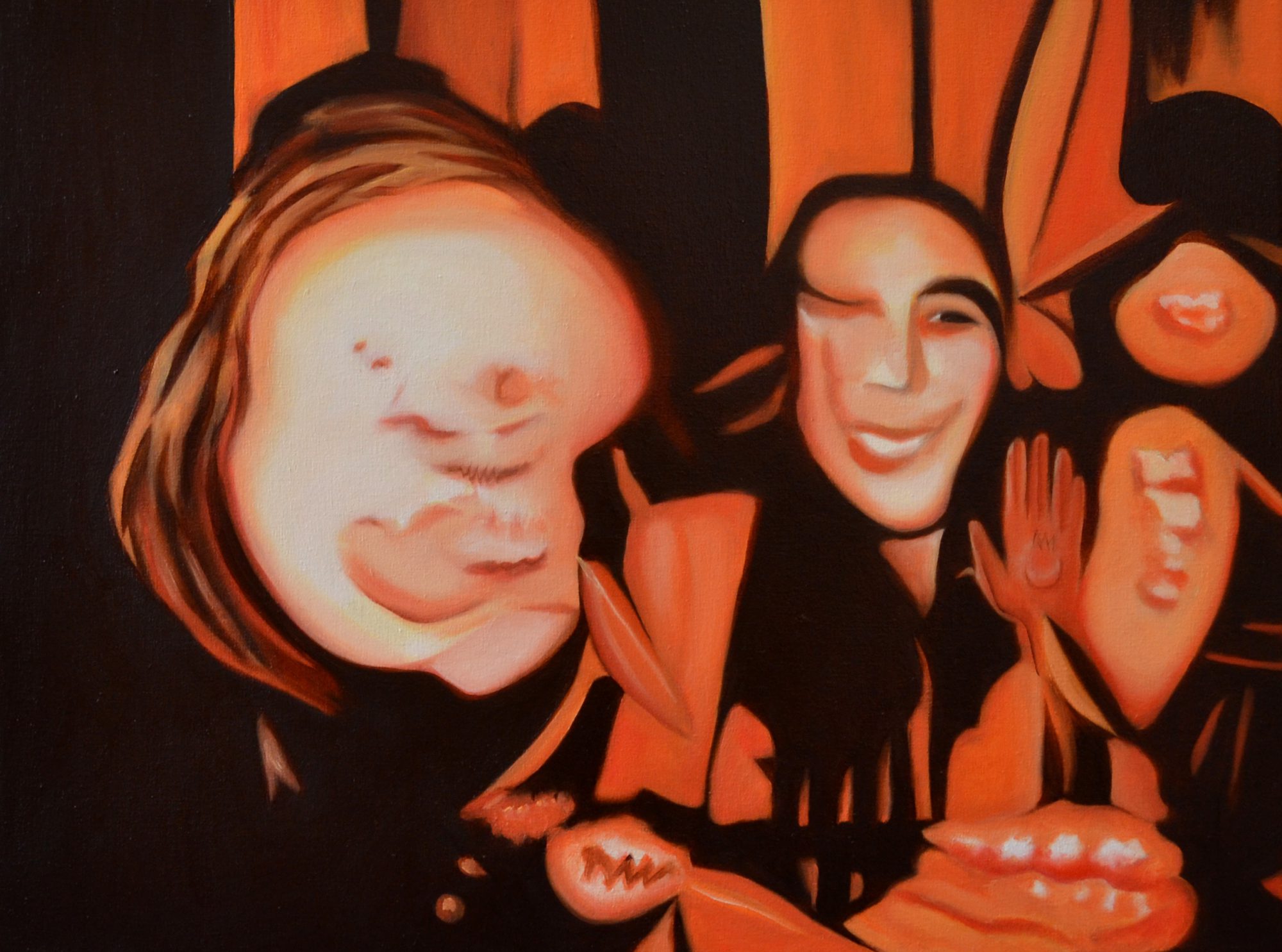
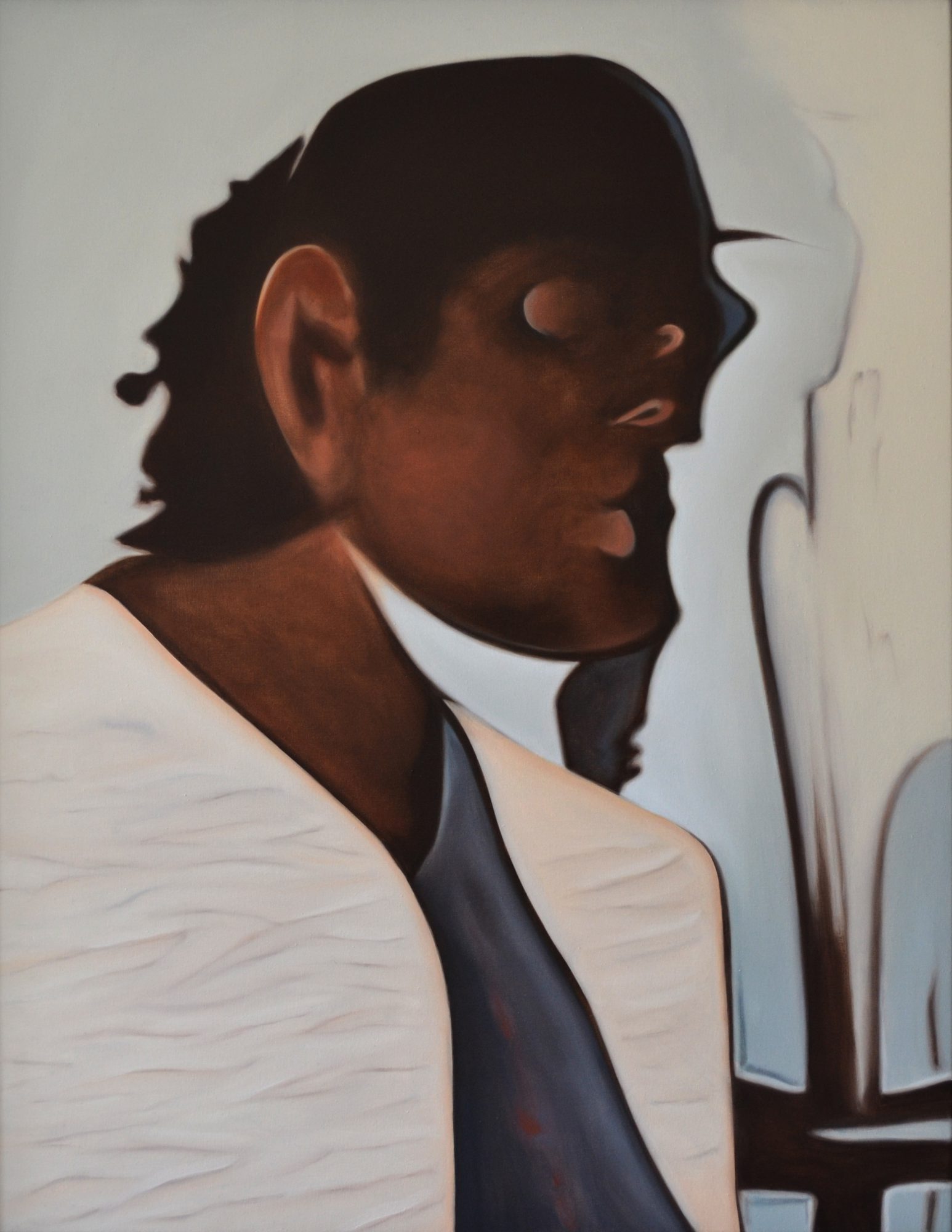
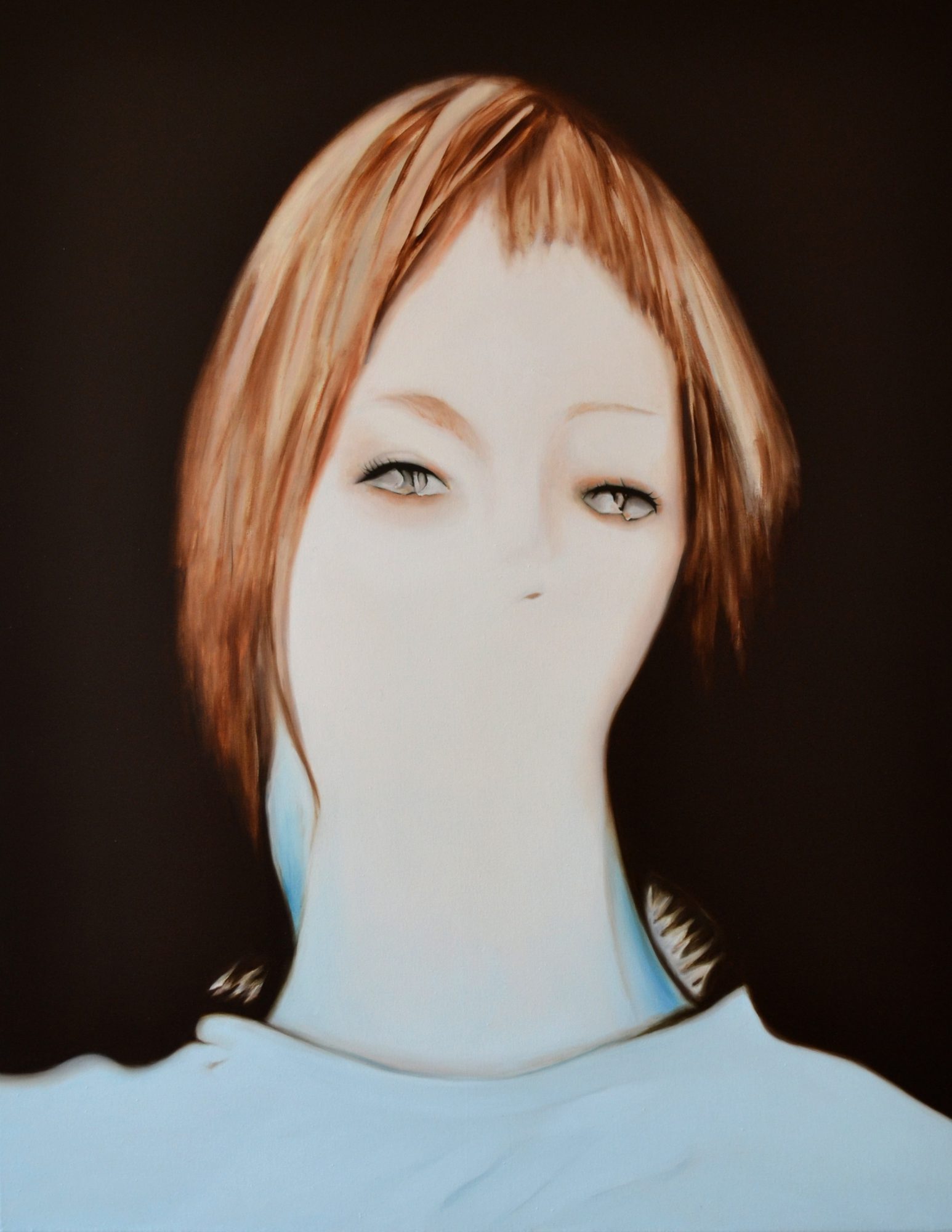
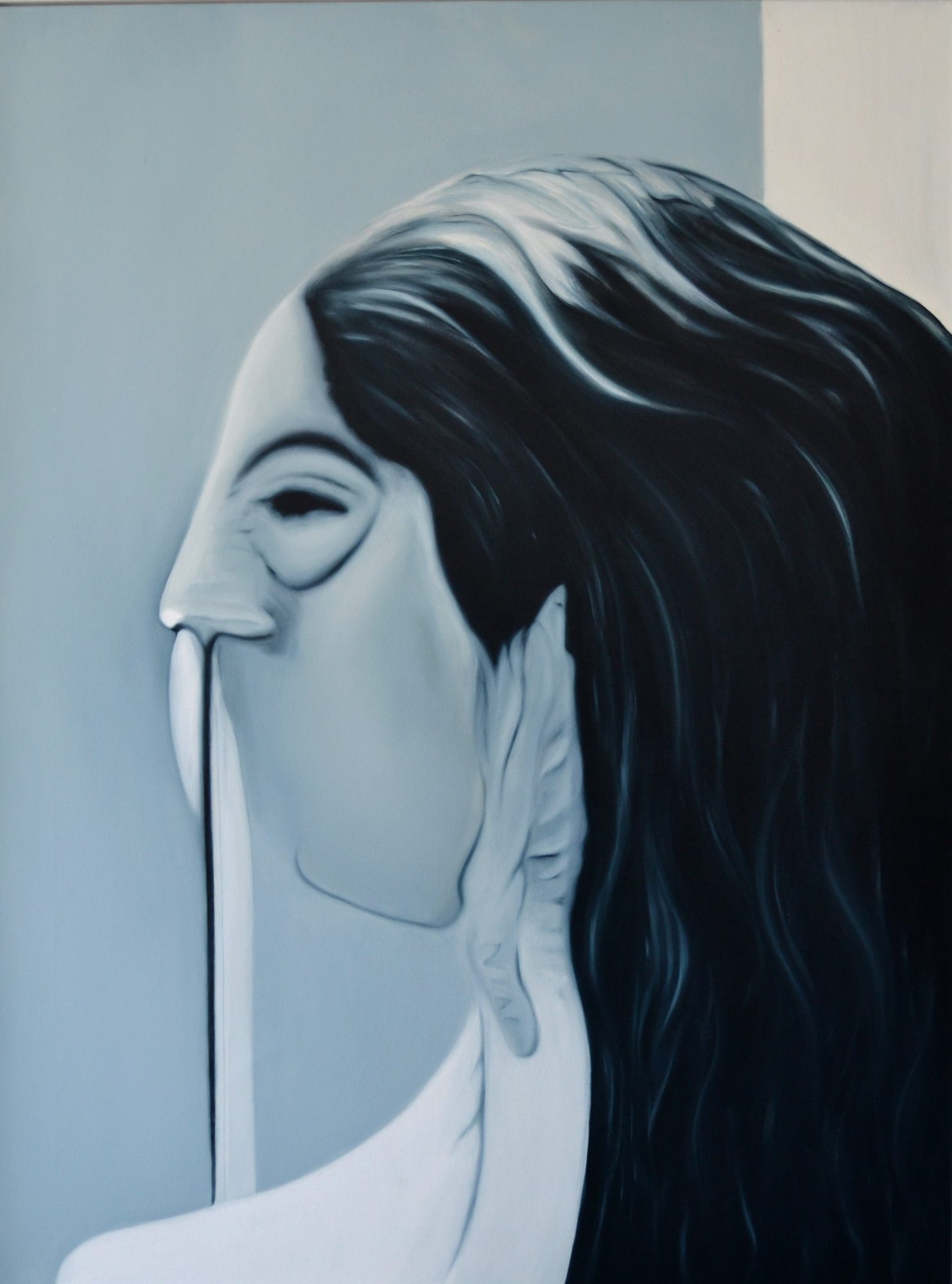
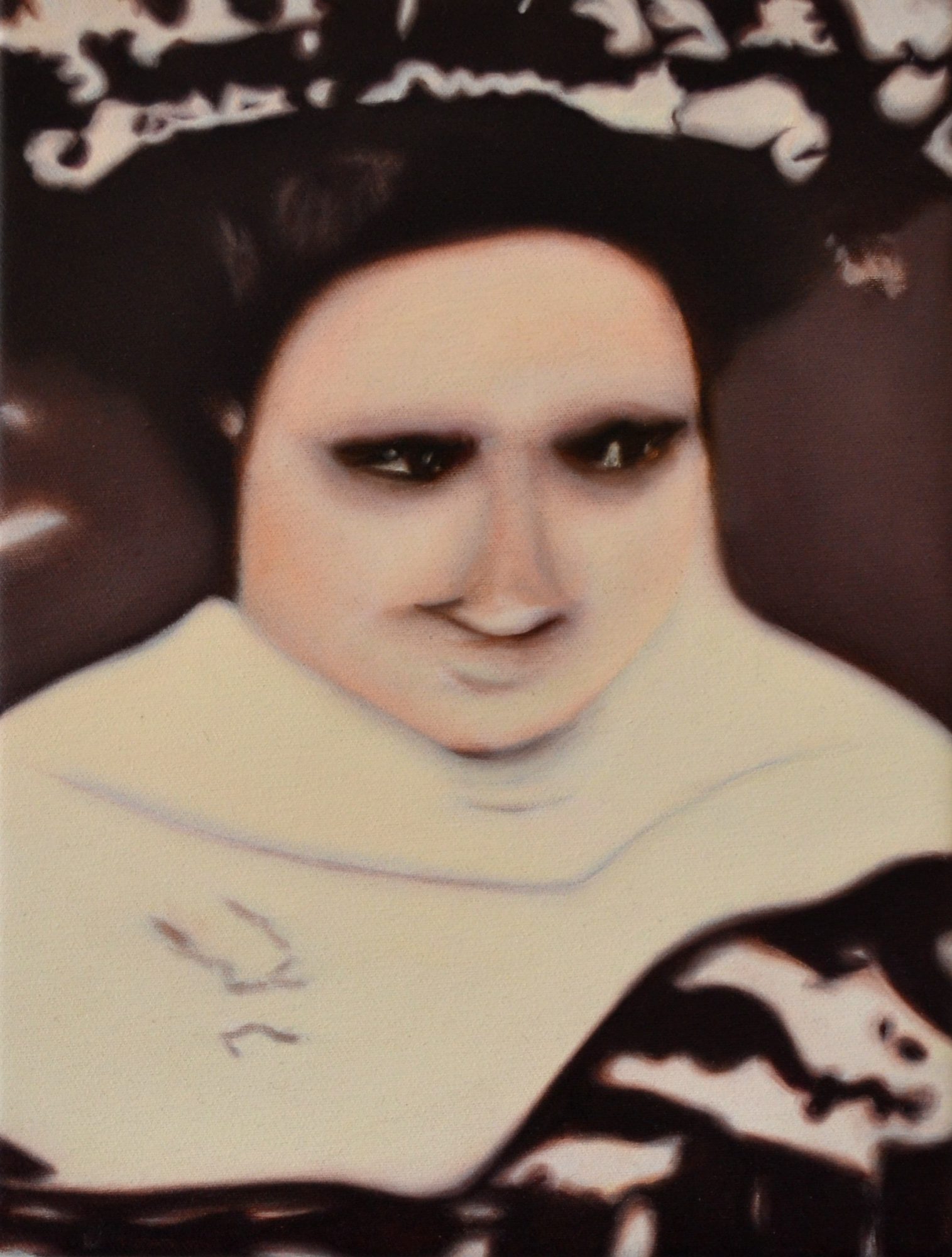
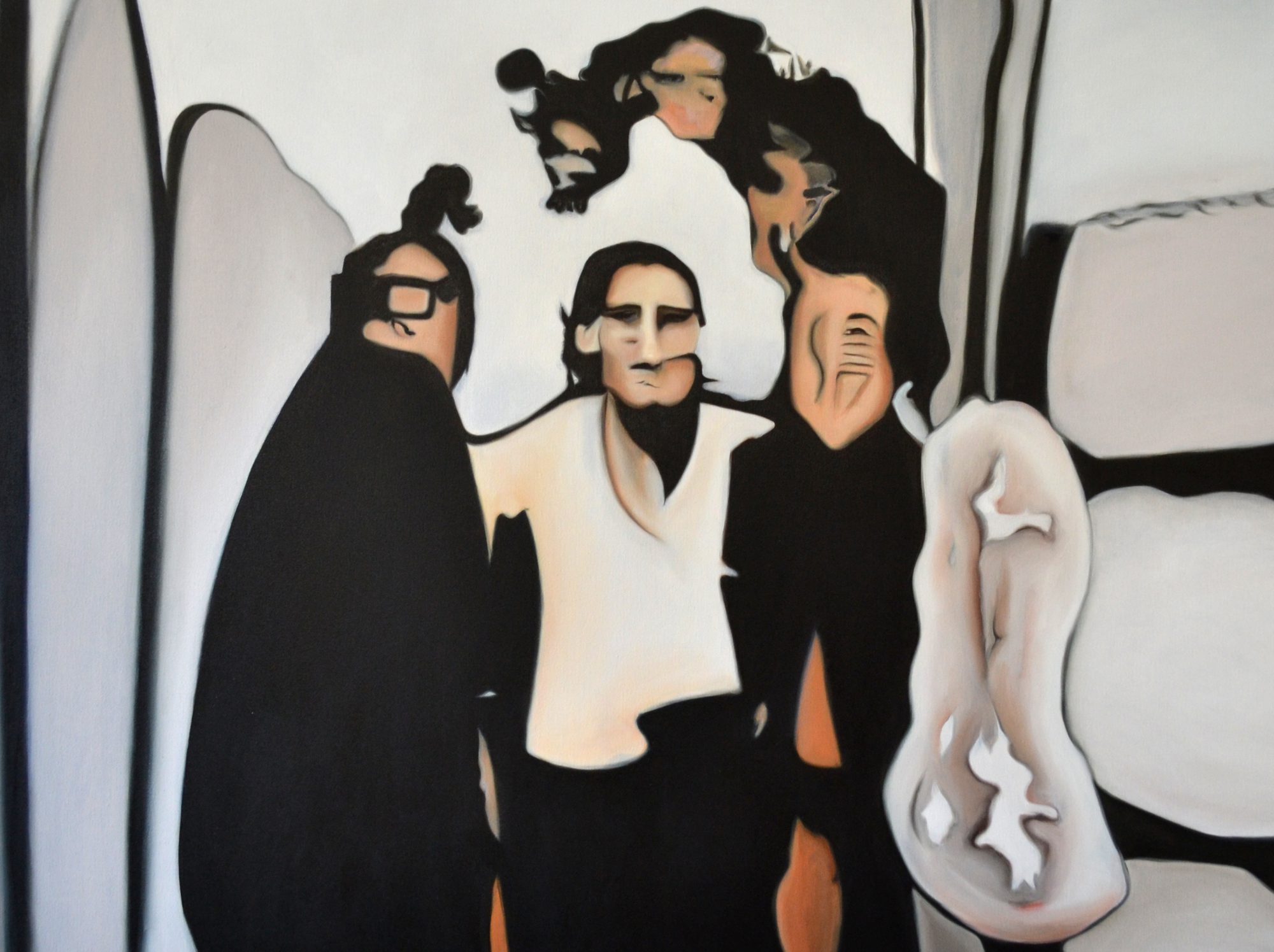
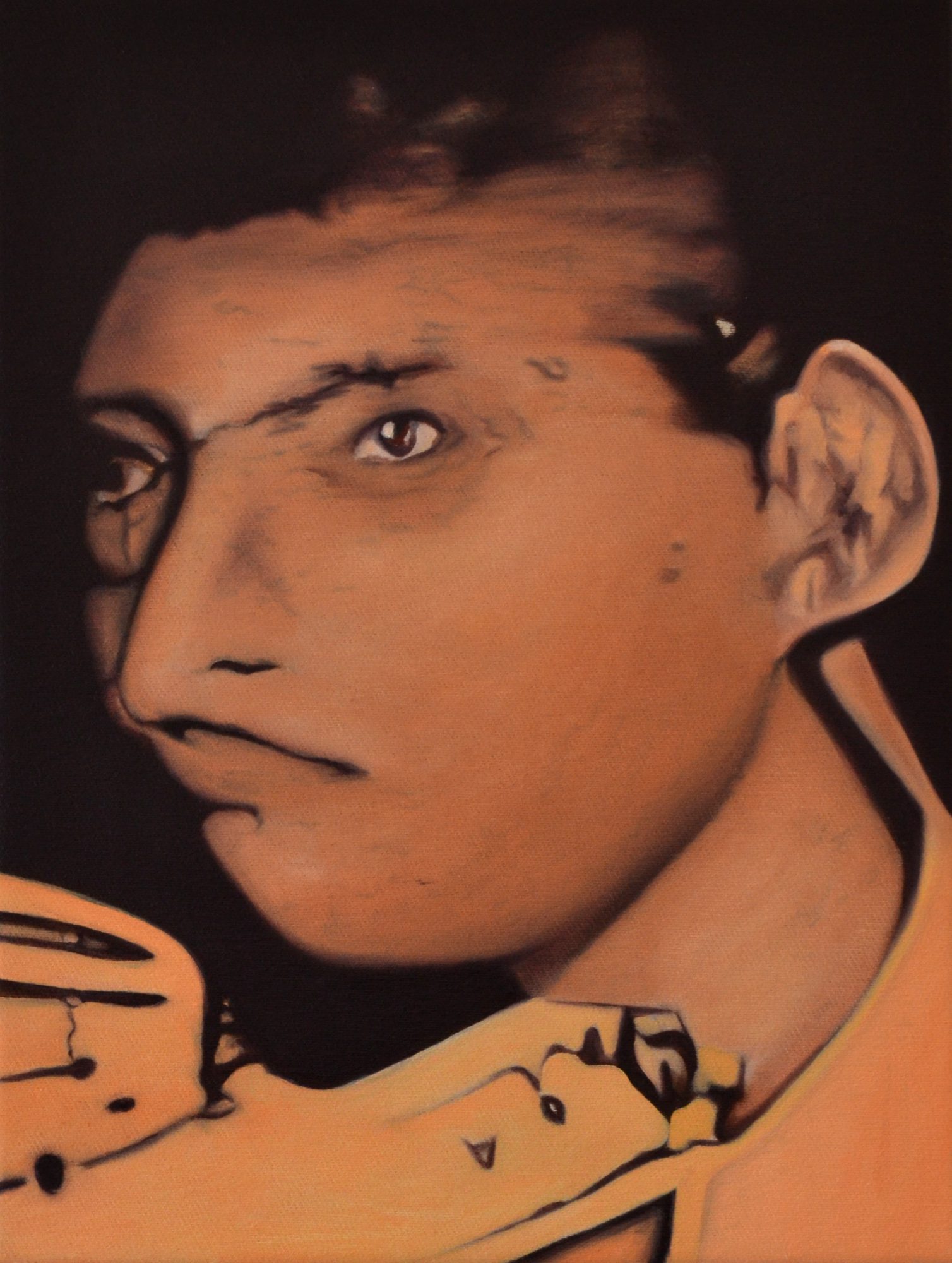
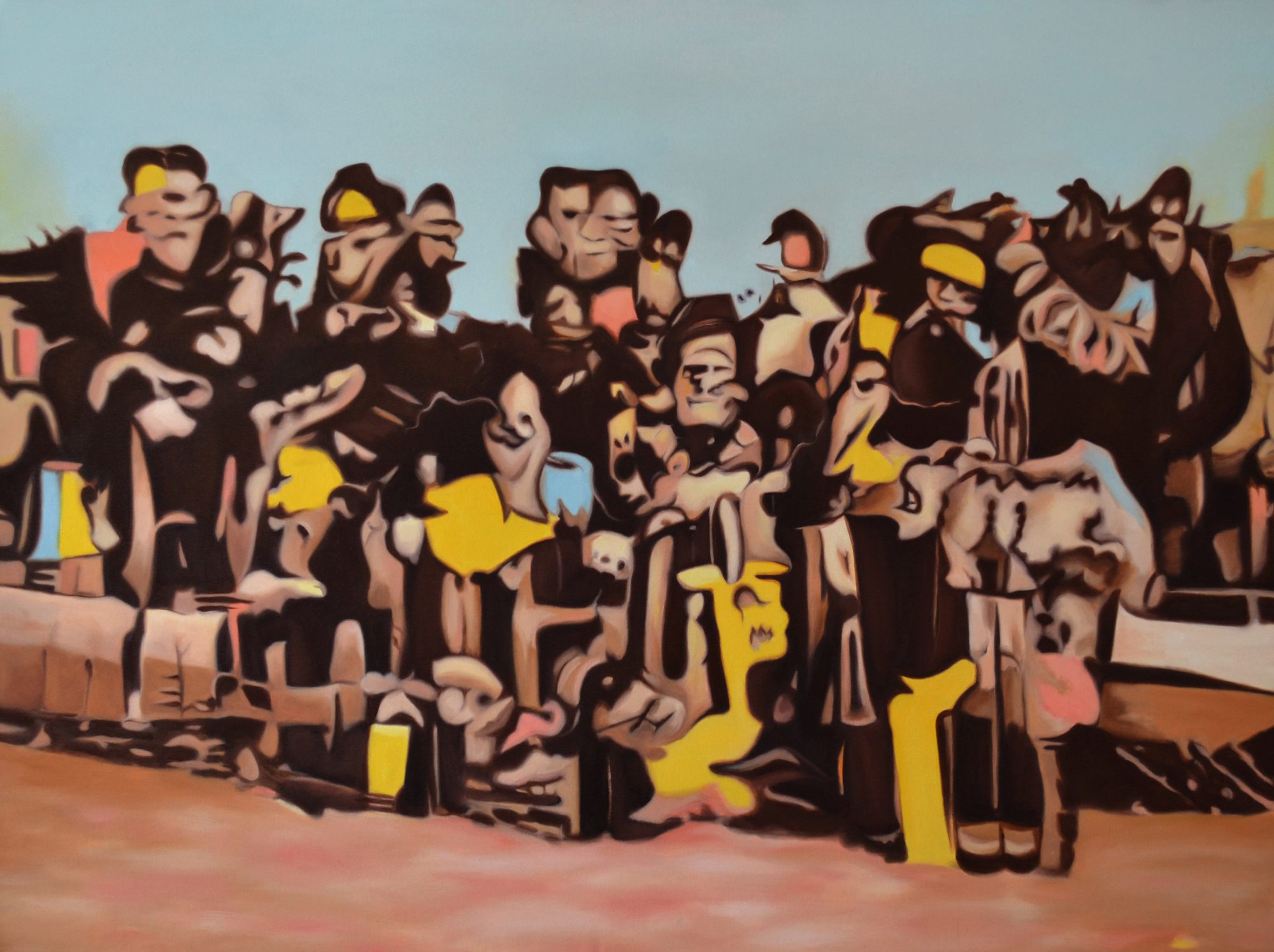
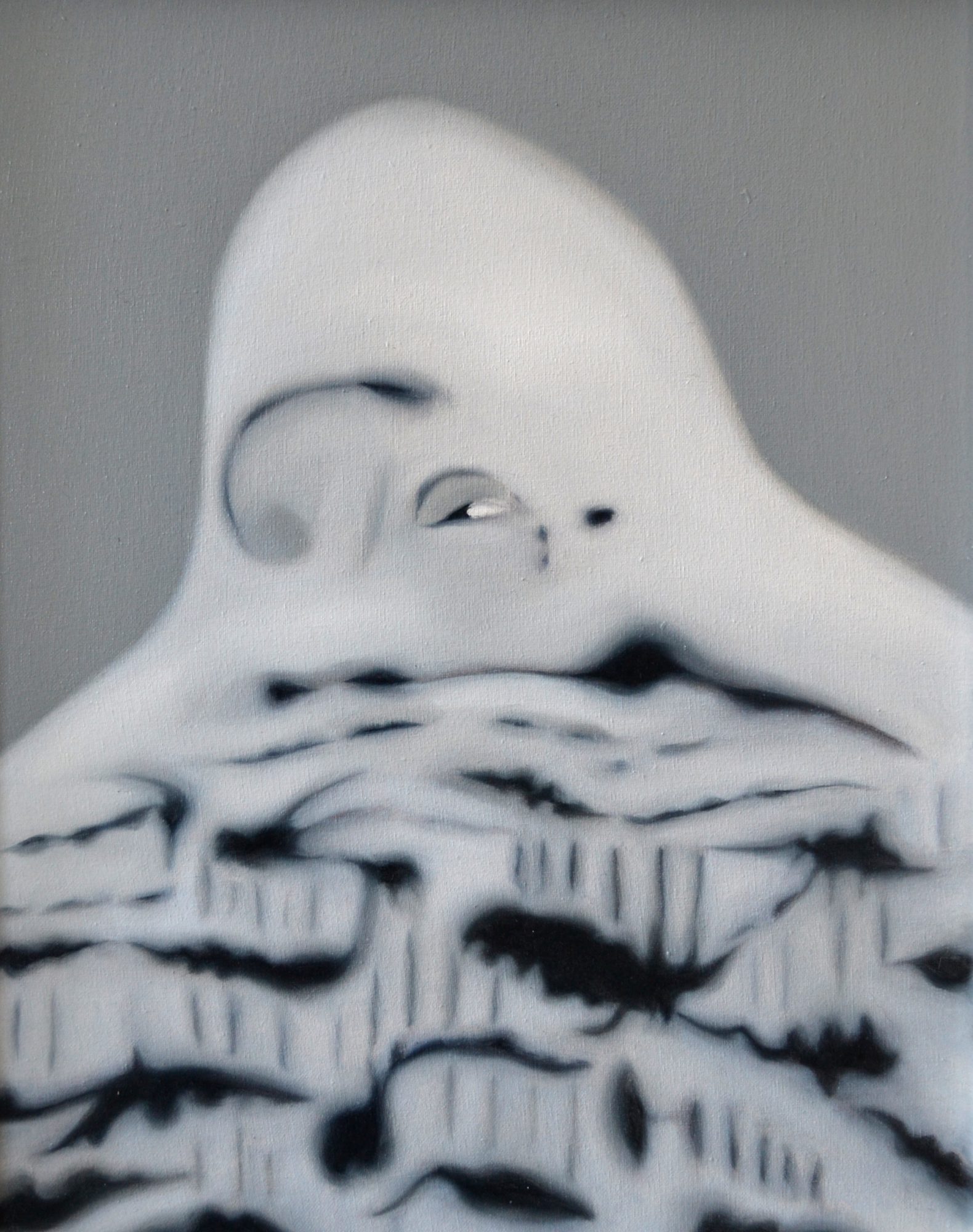
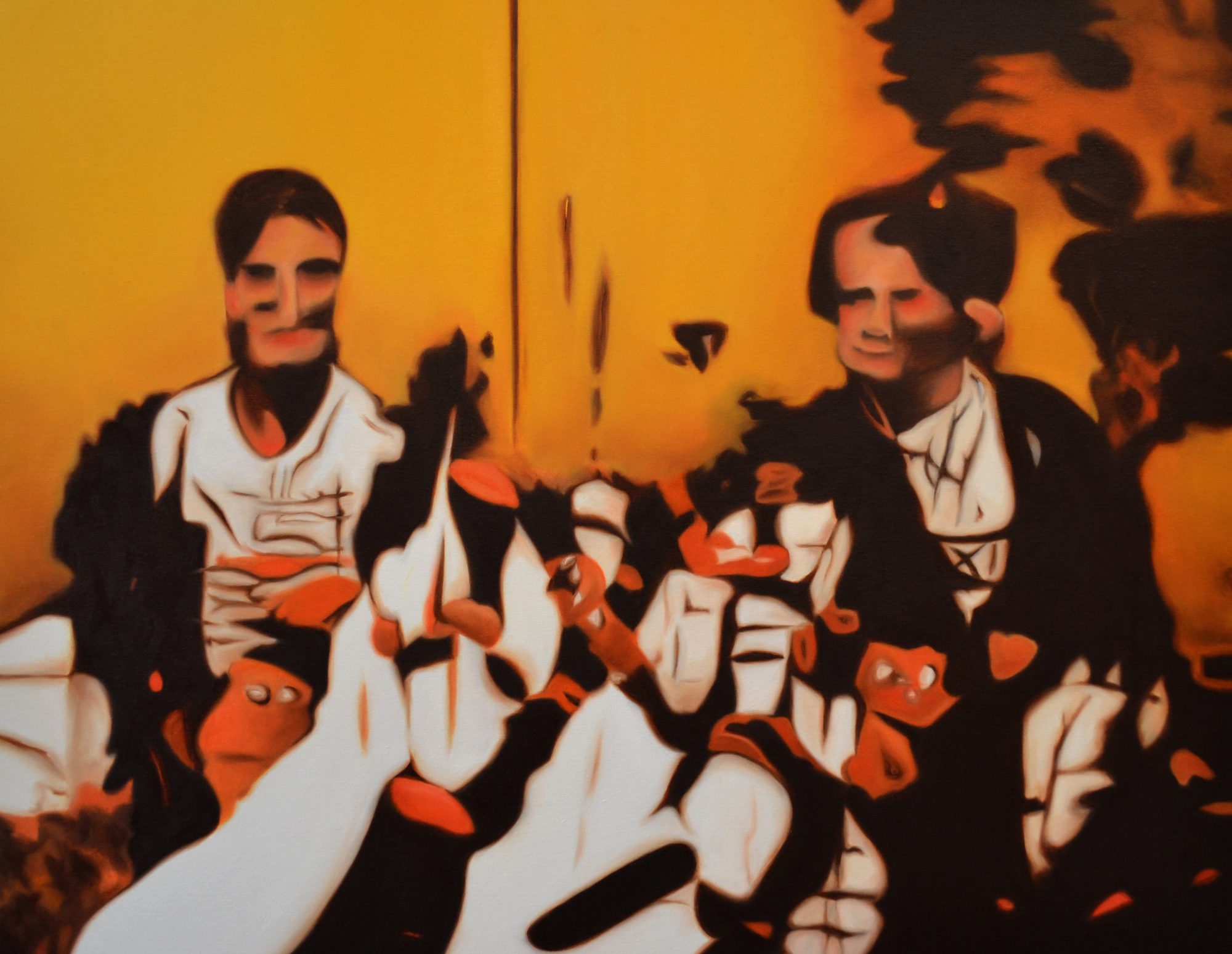
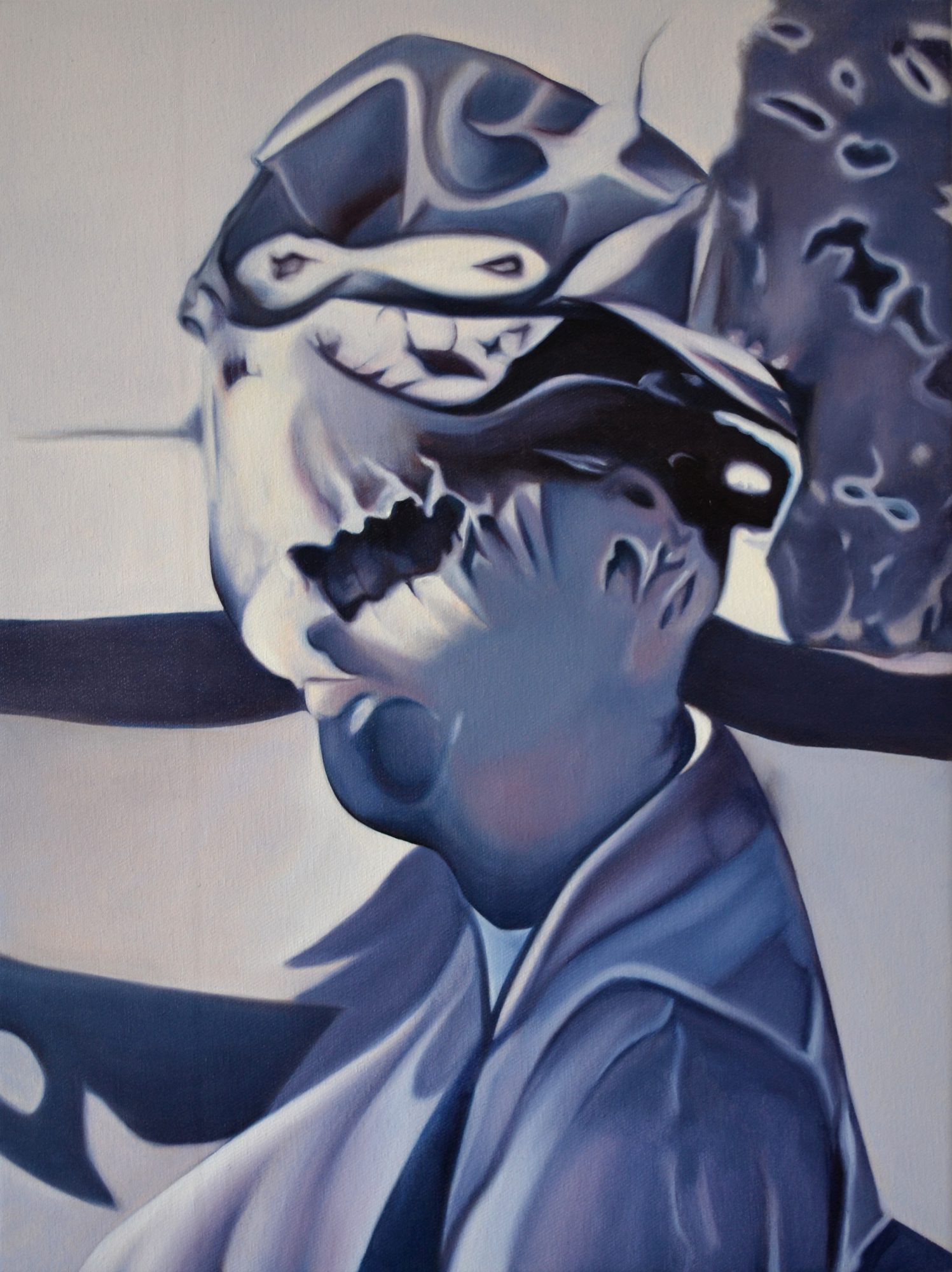
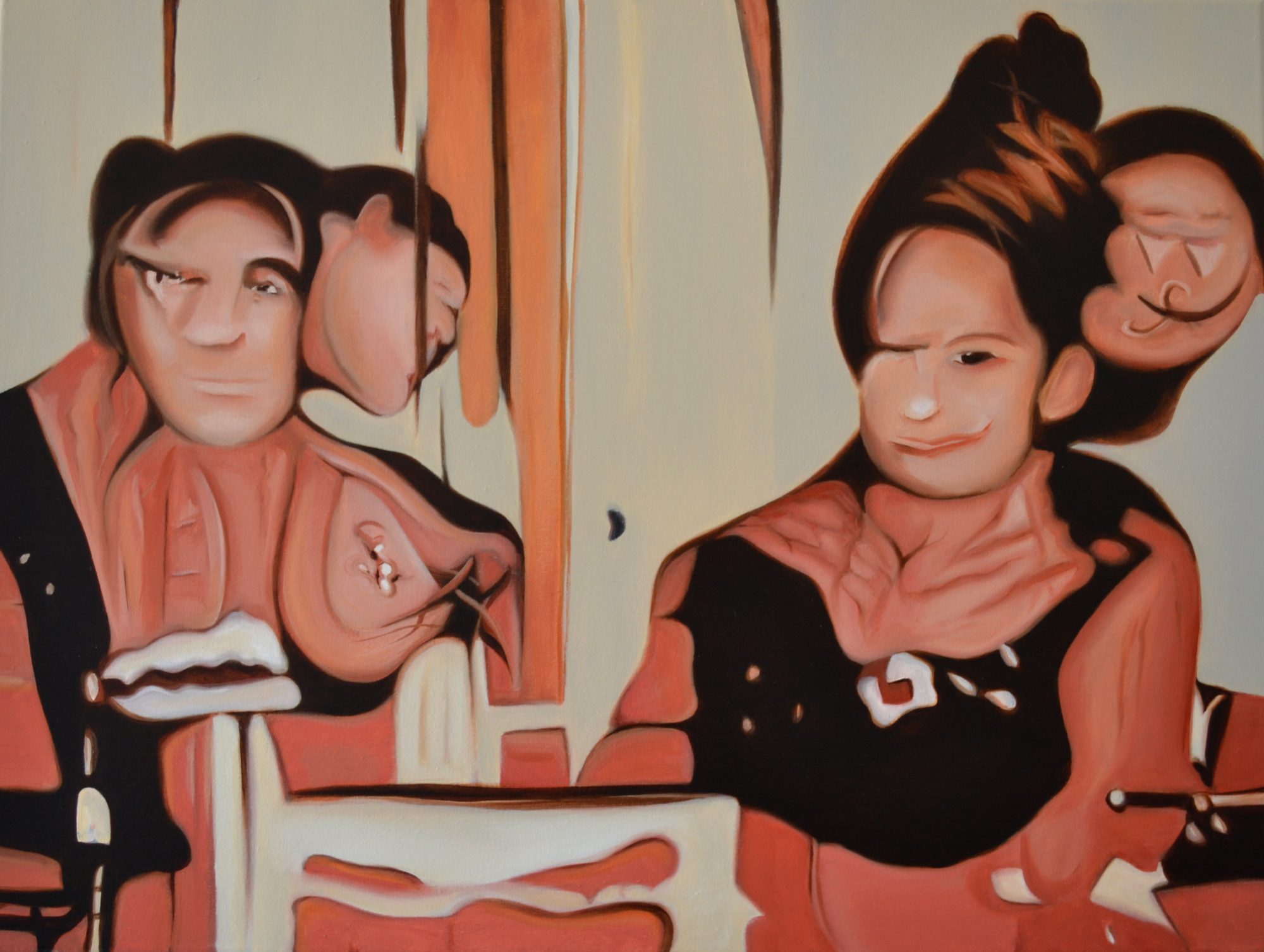
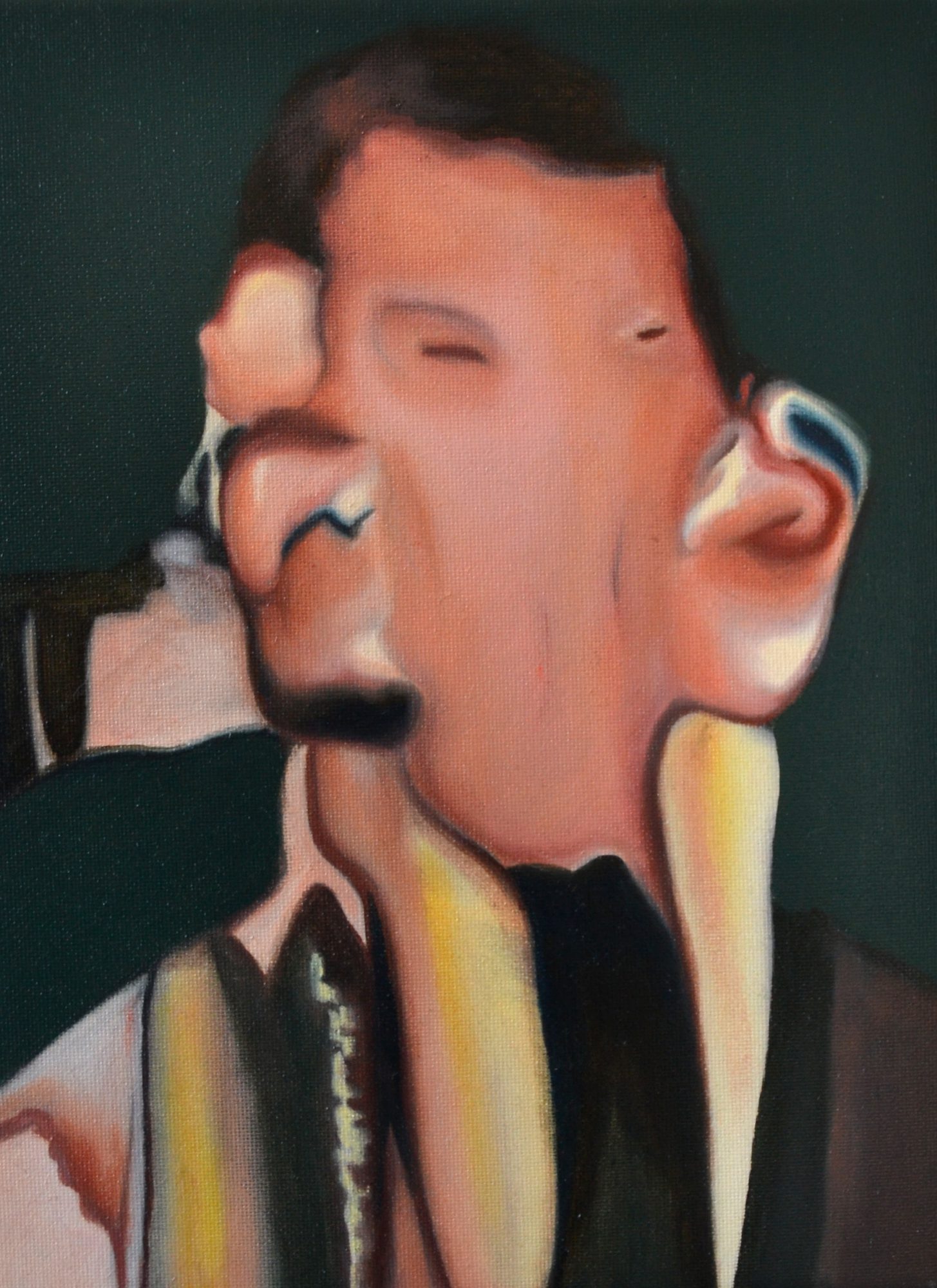
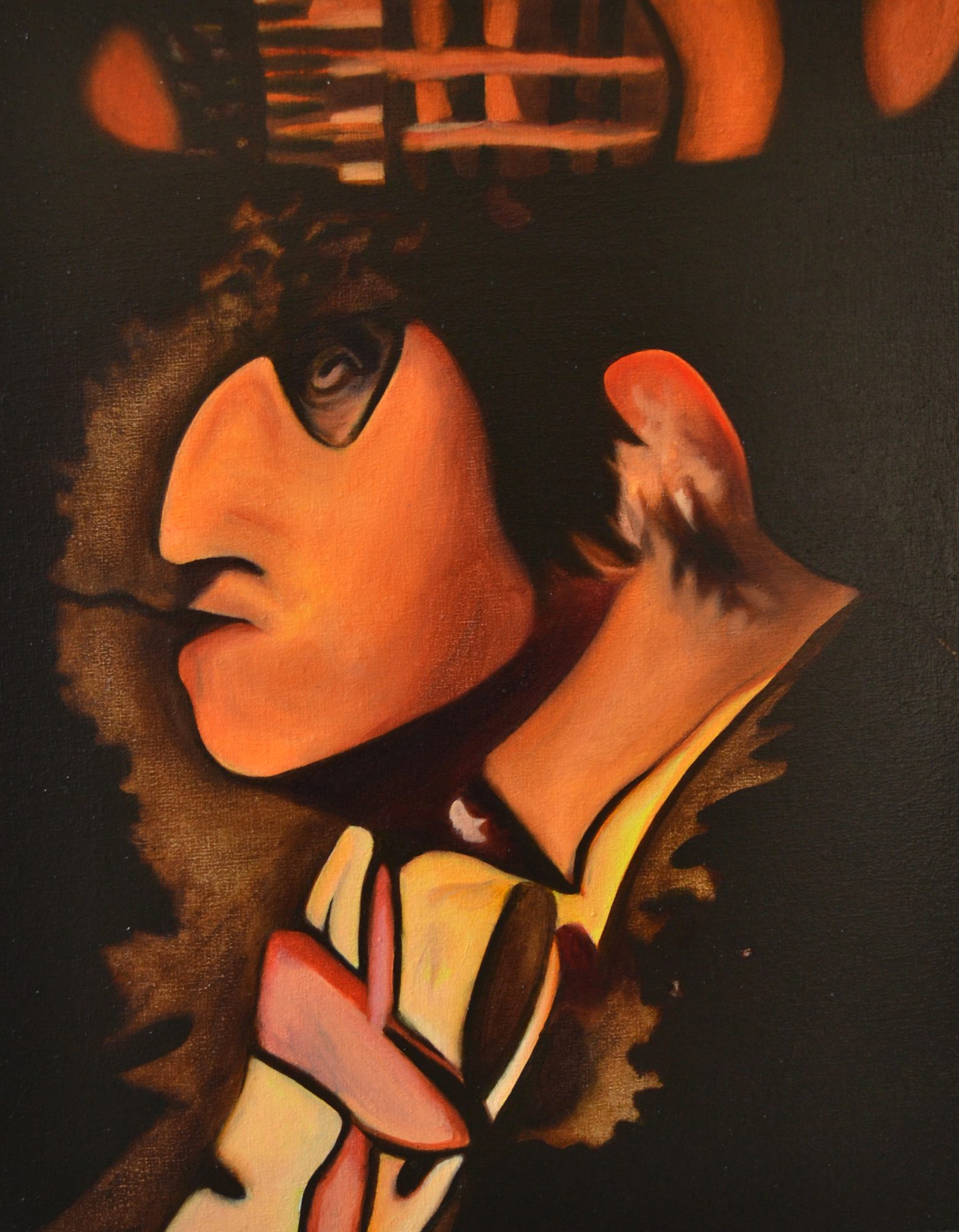
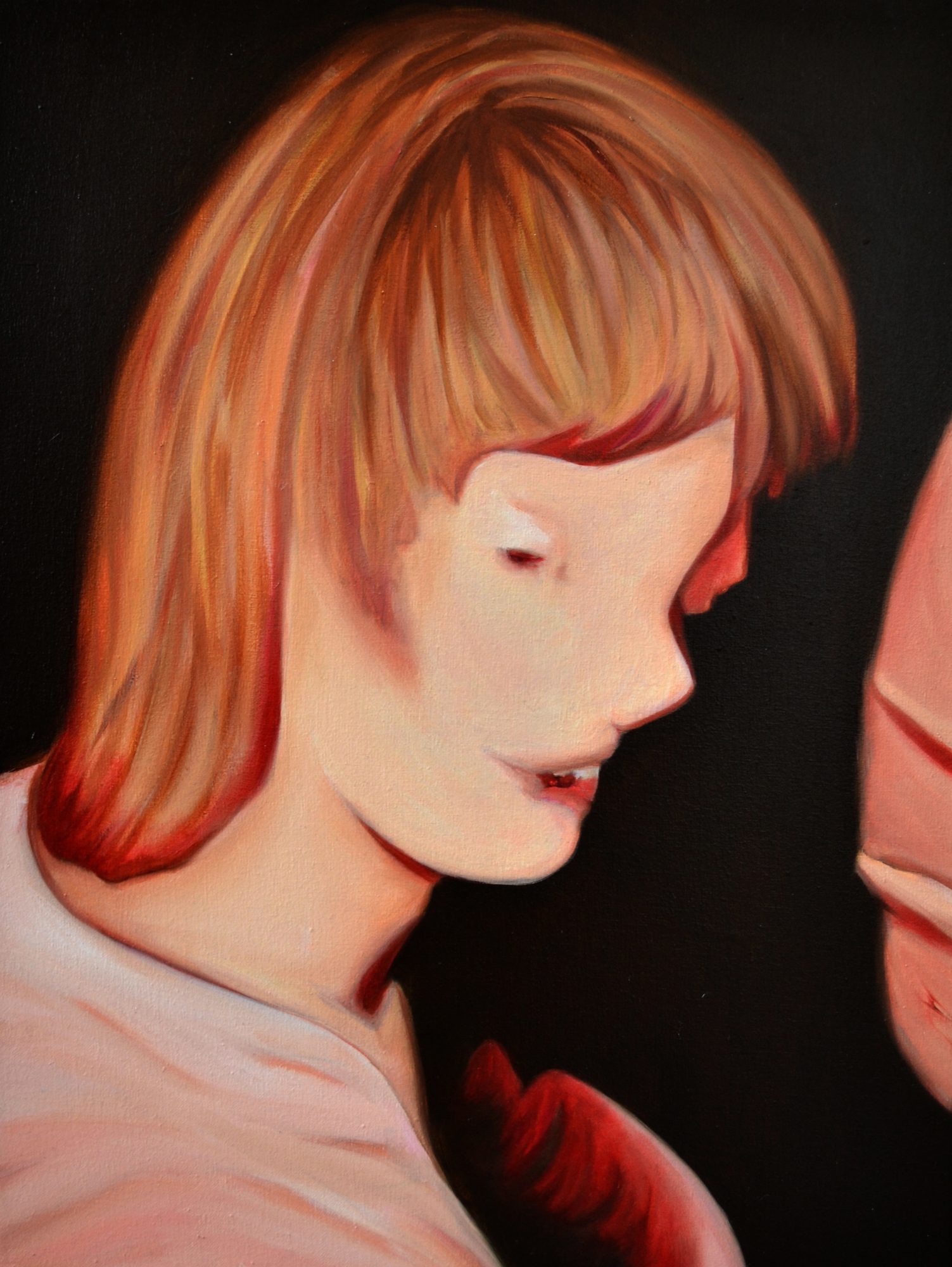
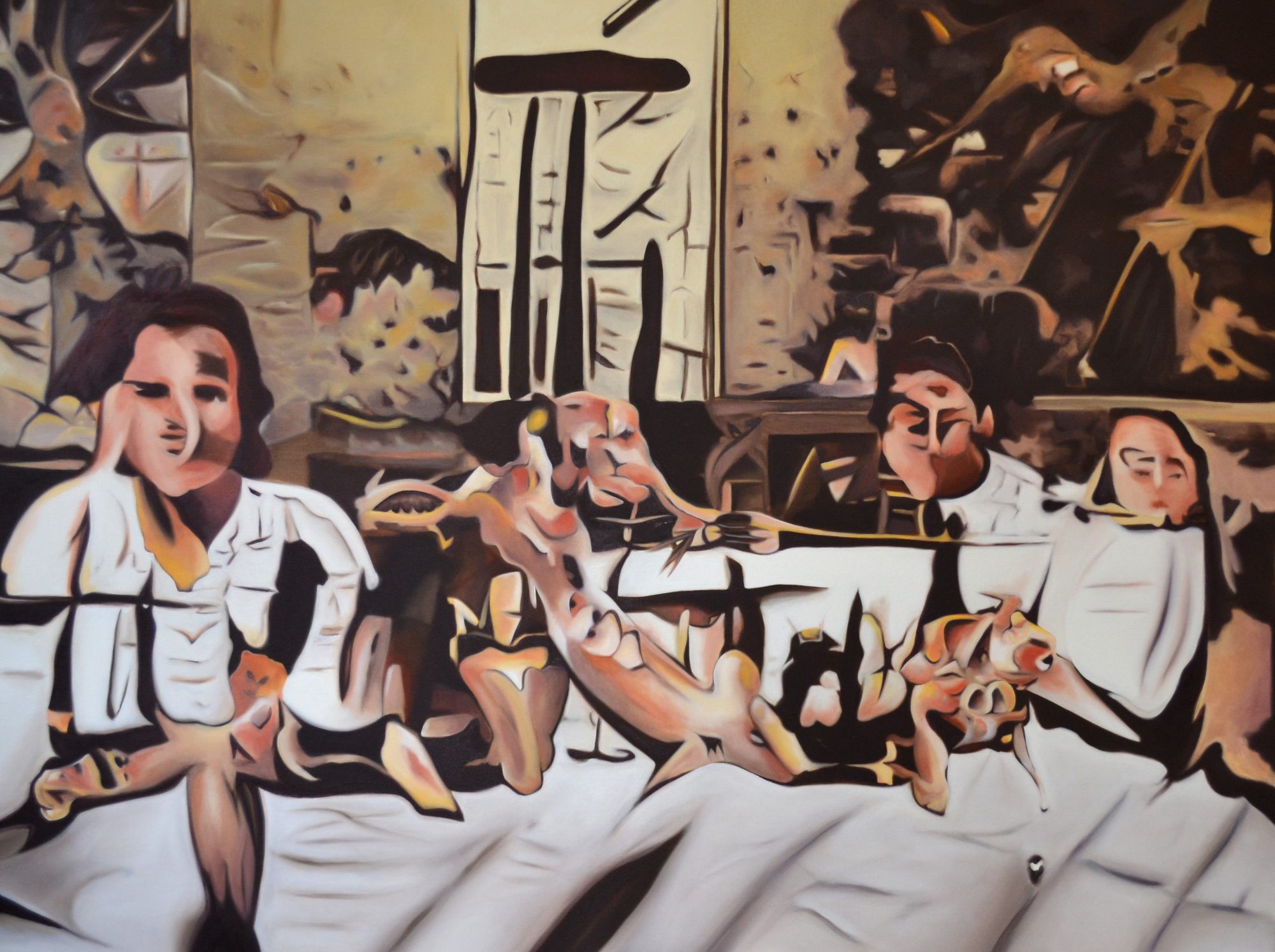
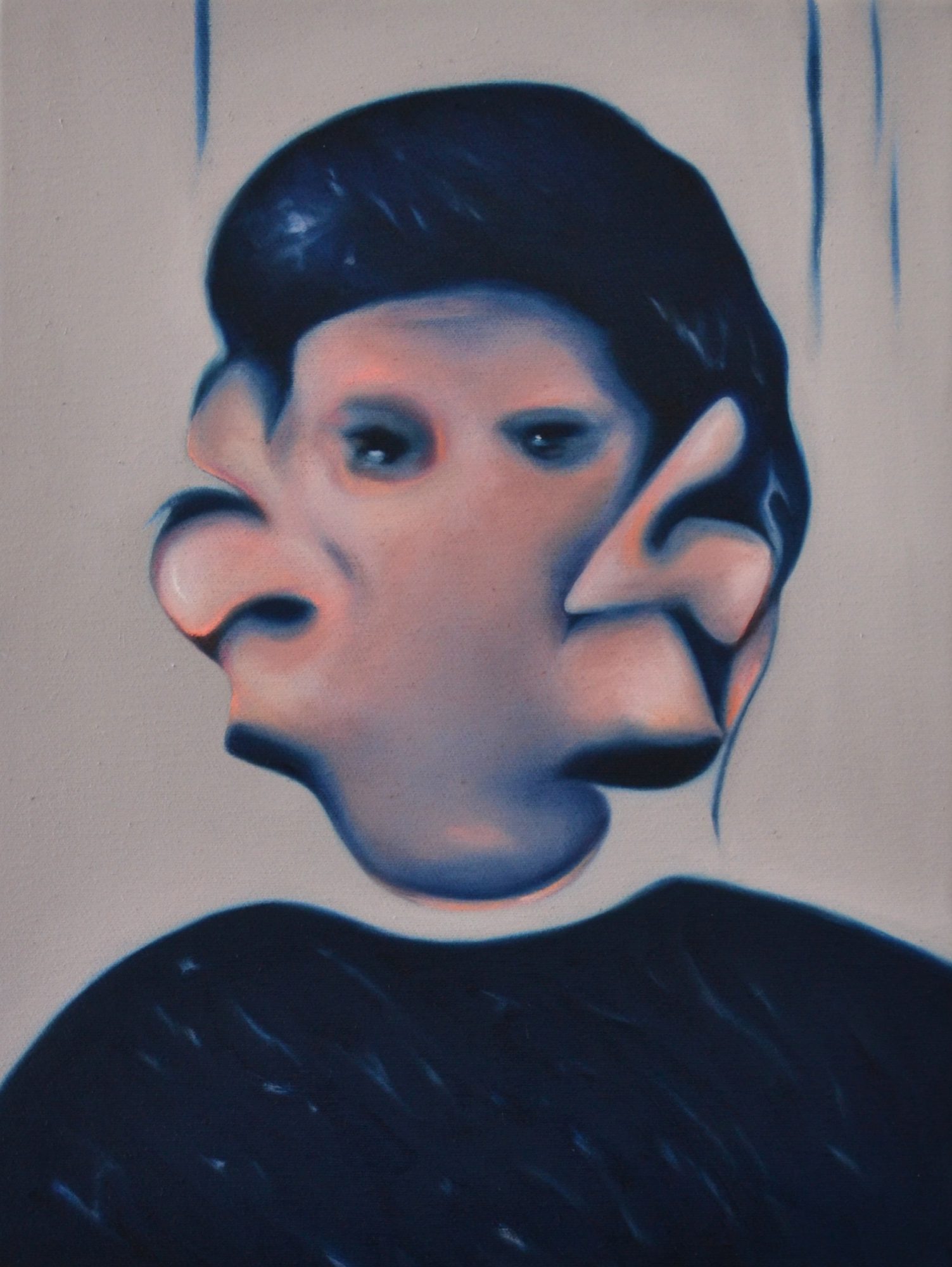
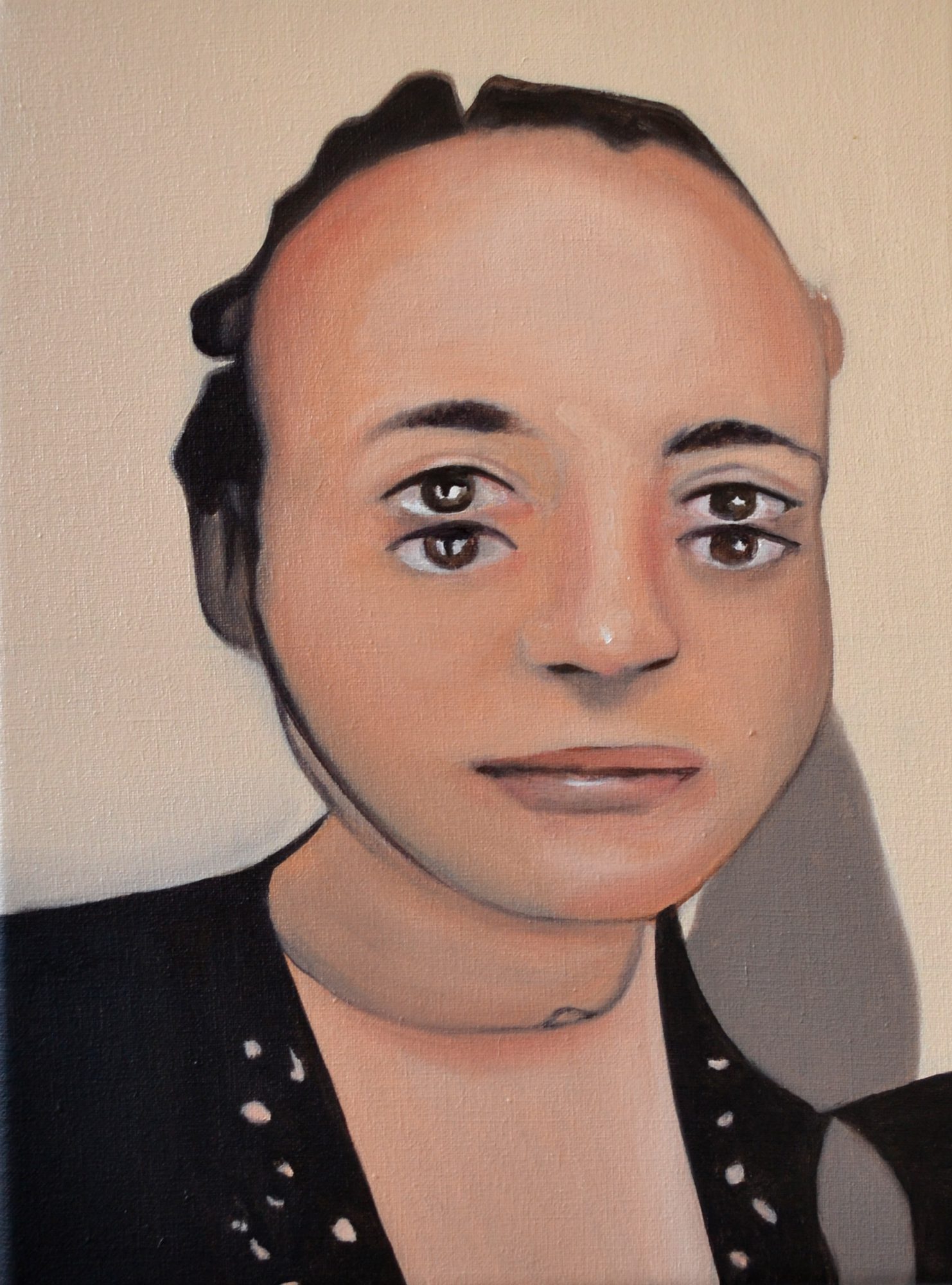
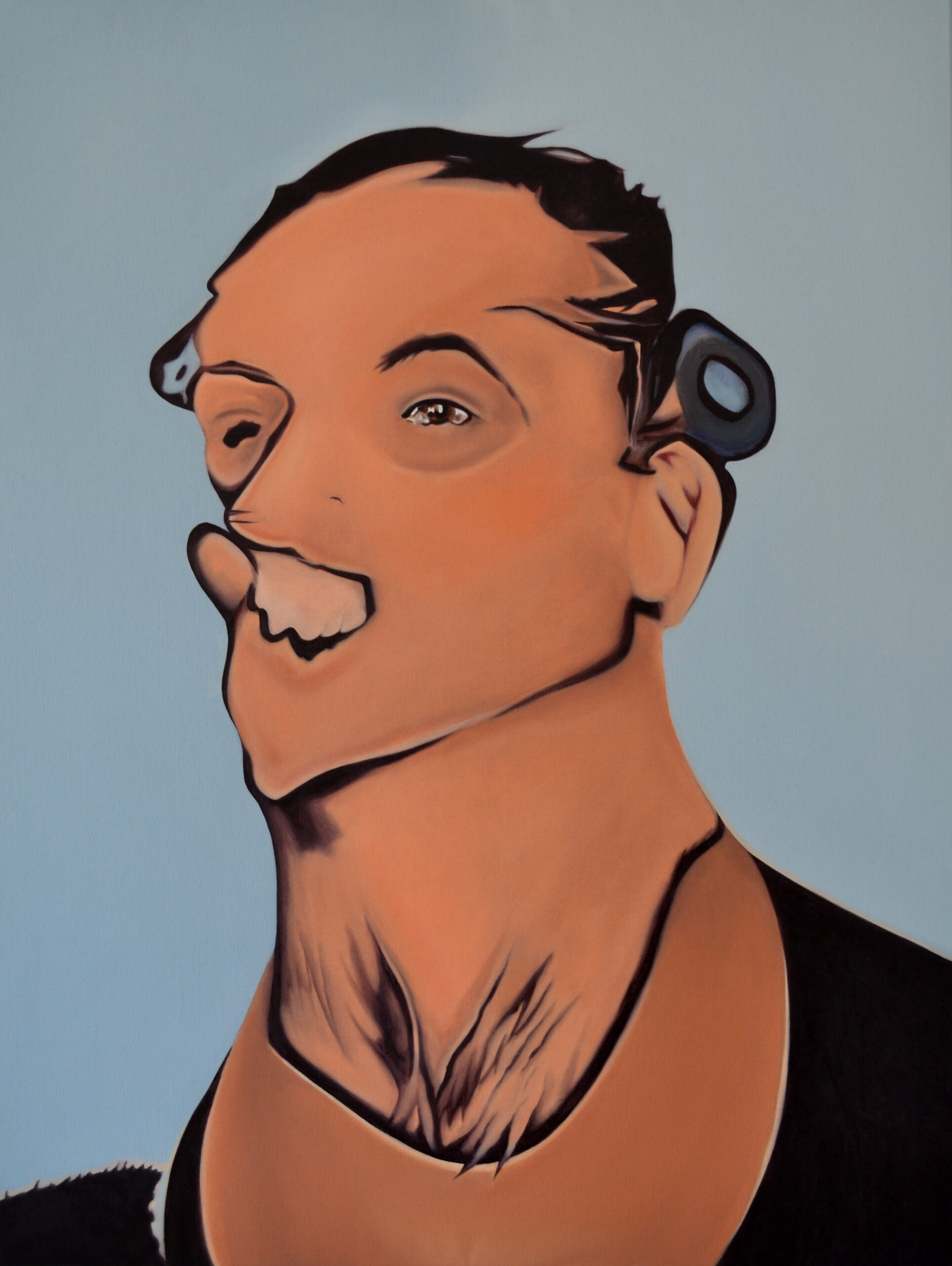
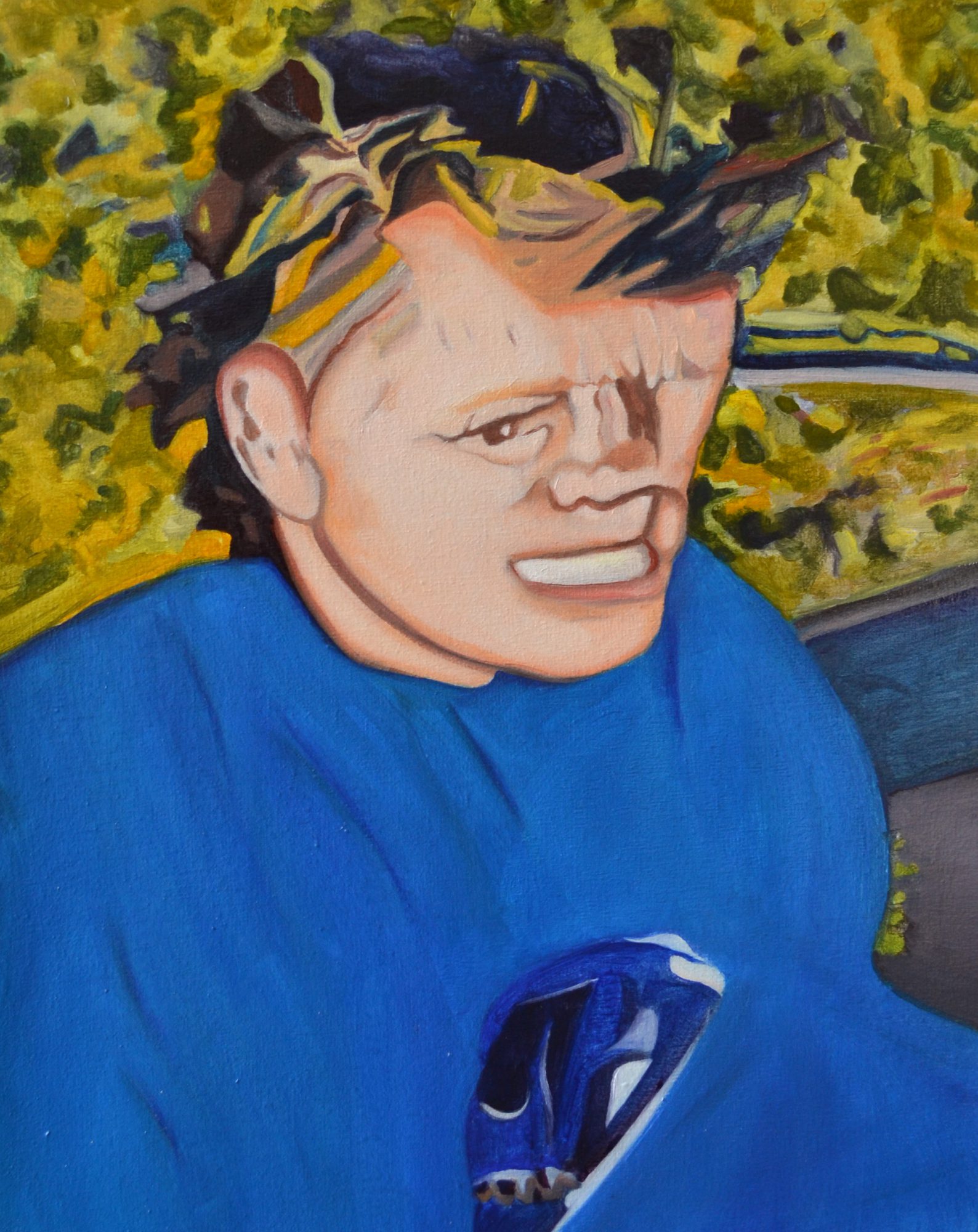
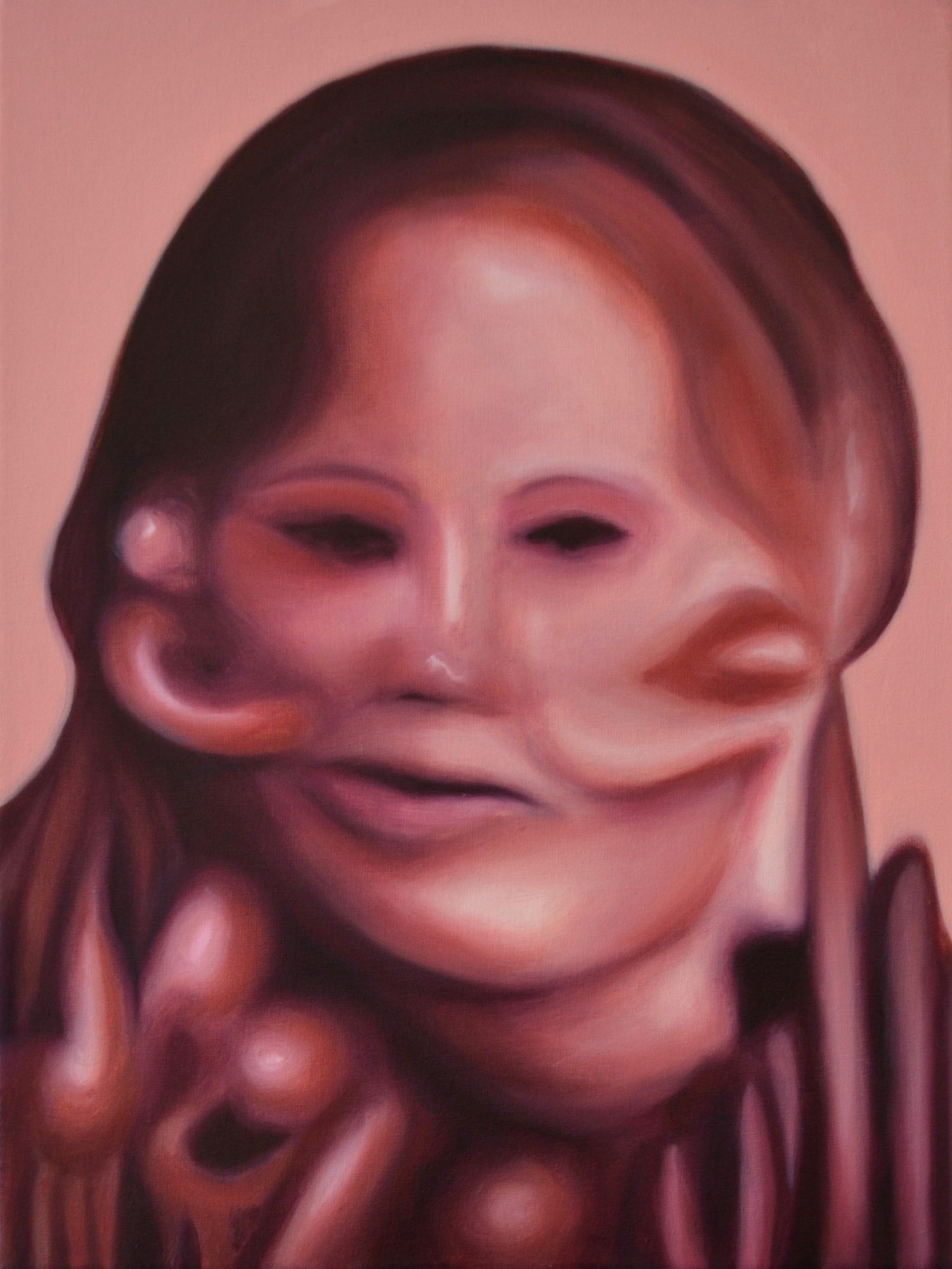
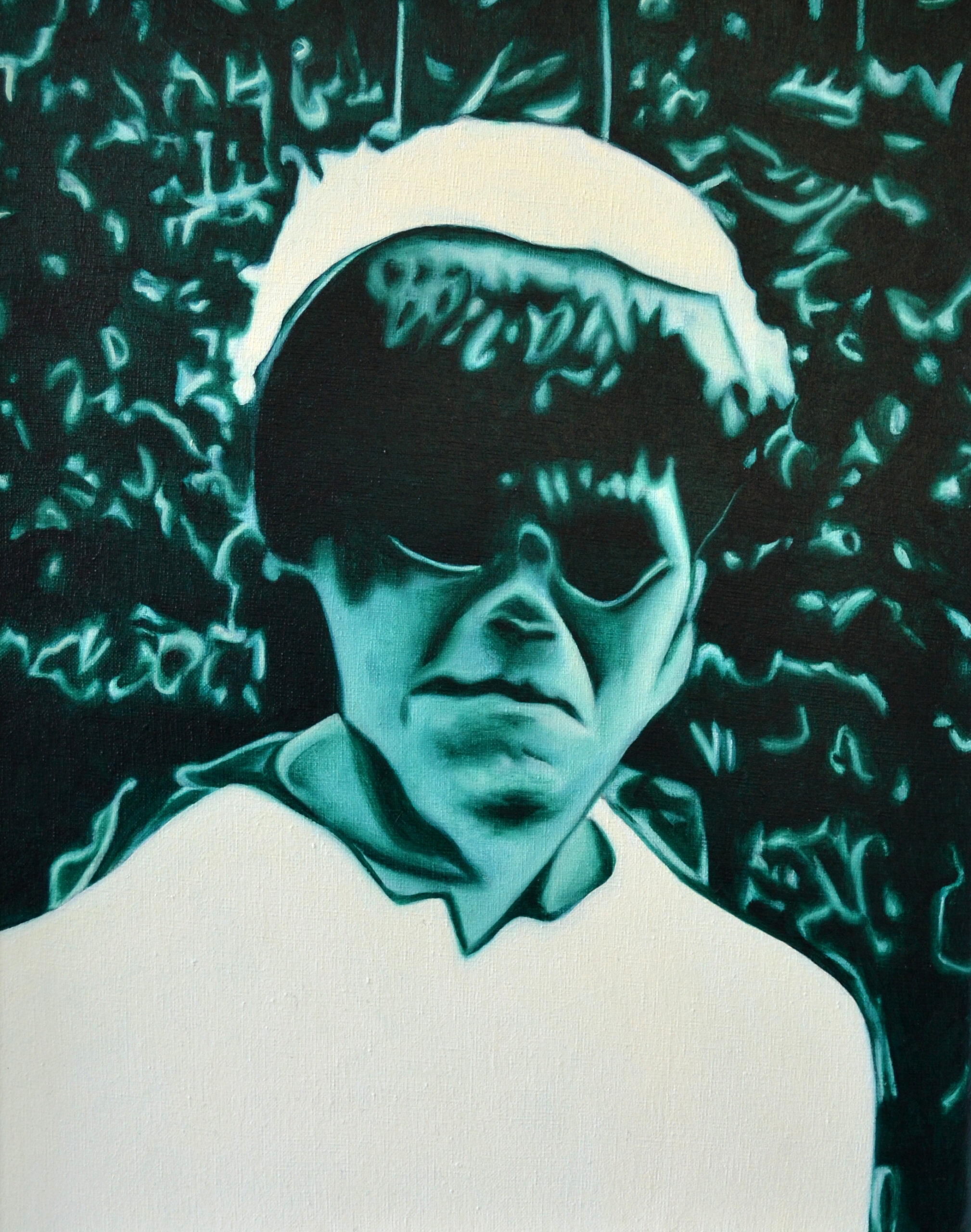
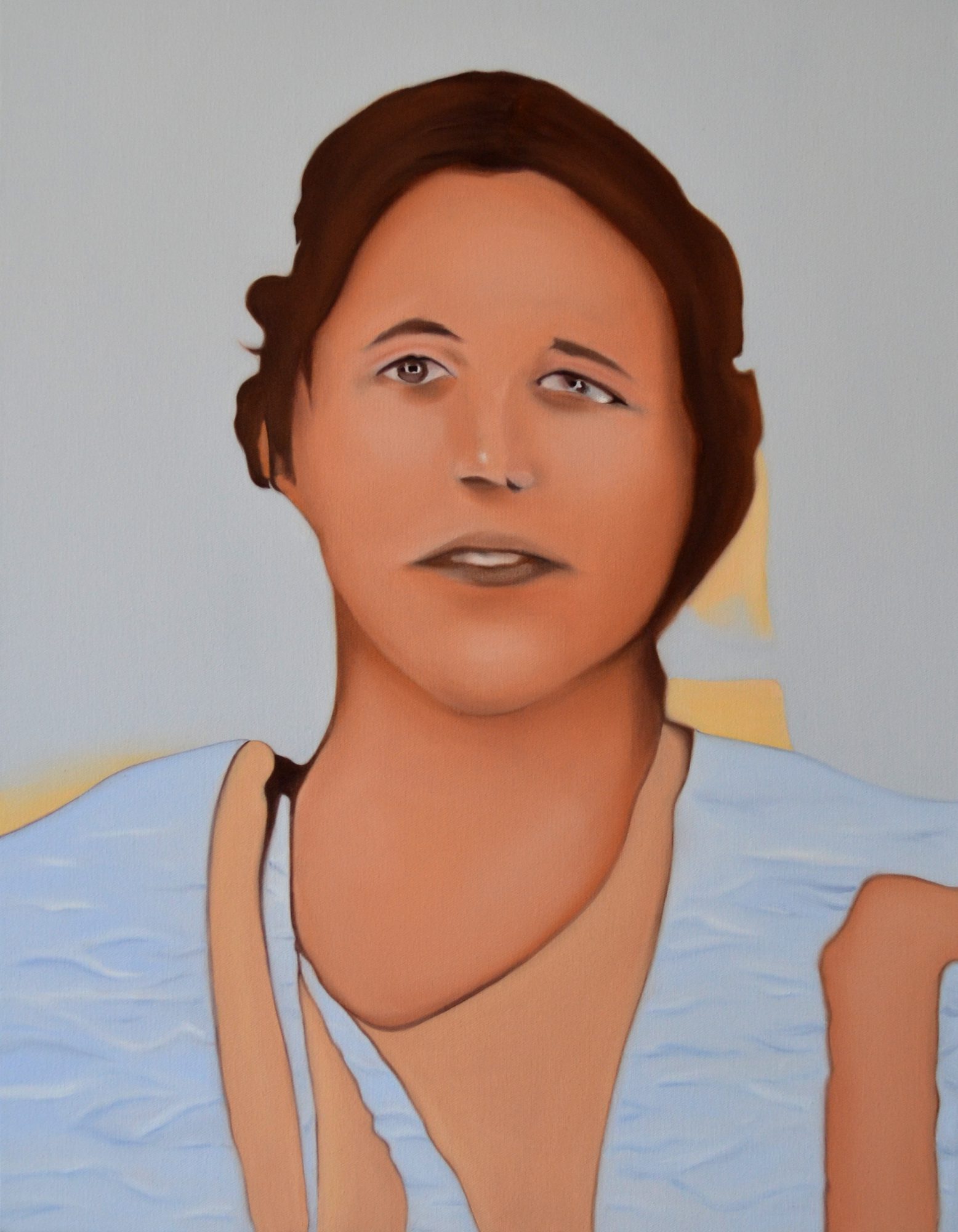
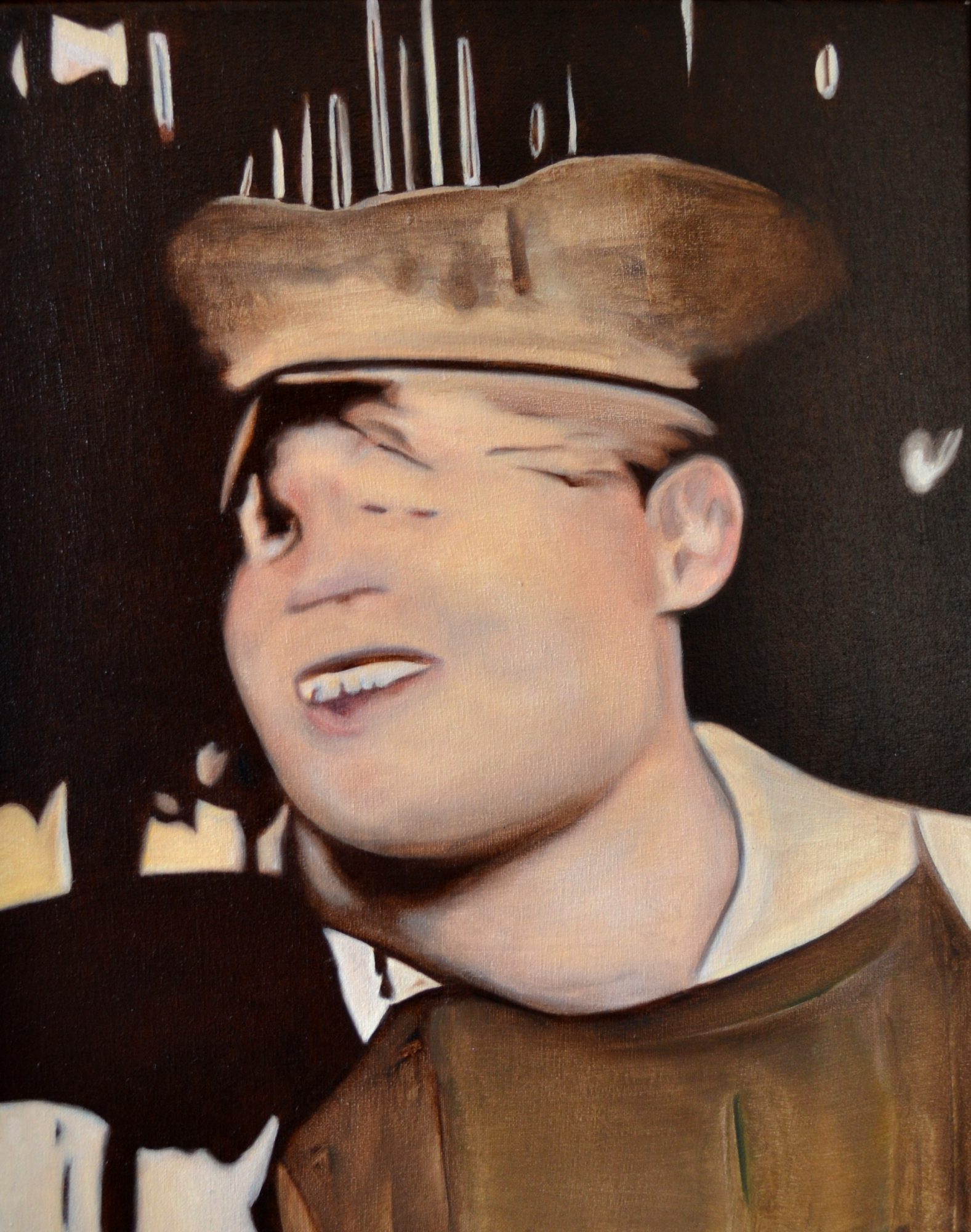
In my series DEEP KIN, I present a group of paintings developed in collaboration with artificial intelligence, continuing and expanding on my earlier project DEEP FAMILY. Central to this work are questions of memory, family history, and the passage of time, and how these can be translated into visual form. Together with designer Casper Schipper, I trained a neural network using thousands of photographs of friends from my personal archive, spanning more than twenty-five years. This material forms a layered dataset of lived experience, which the system analyses for patterns that lie beyond human perception.
From this, the AI generates new and unexpected images that sit between recognition and distortion. I use these generated portraits as a starting point, translating them into oil on canvas. In doing so, I connect contemporary technologies with one of the oldest traditions of image-making: the painted portrait. The process becomes a dialogue between machine-generated interpretation and manual artistic translation.
DEEP KIN reflects the passing of time. Just as memories themselves grow, distort, and develop over time, these painted portraits carry questions about how reconstructing personal history gives rise to alternative realities; of the past, the present, and the future.
The works suggest that reconstructing personal history inevitably produces alternative realities in which past, present, and future overlap. Through this series, I explore how technological systems can extend acts of remembering, while also questioning what is altered, invented, or lost in the translation between human memory, data, and image.
DEEP KIN